R G Carter
Robert George Carter, the founder of the R G Carter Group, had few doubts about what he wanted to be when he grew up – he wanted to be a carpenter, like his grandfather.
After leaving school at fourteen he became a carpenter’s apprentice, practising his new skills with the tools he had inherited from his grandfather. On completing his apprenticeship he began life in London but decided it was not for him and returned home where he gained employment at Youngs, one of Norwich’s best-known building firms.
George joined the army in 1914 and was lucky to survive the war though his health was permanently affected. He was wounded twice, and it was feared he had lost his sight during one gas attack; fortunately this proved not to be the case. His bravery earned him the Military Medal and the Croix de Guerre.
Having refused a commission early in the war, he left the army as Sergeant, and, within three days of being demobbed, found himself a job with the London building firm Scott and Middleton, working on the site of Caley’s chocolate factory at Chapel Field, Norwich.
That same year Scott and Middleton’s work at Caley’s was complete and they asked George to move to Newark to work on a bridge building contract. George, however – being a passionate county family man, wanted to stay in Norfolk. He was an ambitious young man and decided to leave Scott and Middleton and concentrate on building up his own business.
He began by building cottages at the Stanninghall Tuberculosis Colony, followed by private houses including some semi-detached properties at Rail View, Drayton.
In 1922 R G Carter carried out its first job for Bullard’s Brewery, converting buildings at their Anchor Brewery into garages as they moved from horse drawn vehicles to motor lorries.
During the 20′s and 30′s R G Carter’s work included a number of village halls and church buildings, such as Sunday school rooms for the Norwich churches in Belvoir Street and Dereham Road, churches for the Christian Scientists and for the Christian Spiritualists, and refurbishment of St Alban’s church at Lakenham; public buildings at the Norfolk & Norwich Hospital, the David Rice Hospital in Drayton and the maternity wing at the Norfolk & Norwich; and, in the late 30′s, school contracts such as Norwich Grammar school and Diss Secondary school.

Building the Constitution
After the First World War public houses were being built all over the country to accommodate rapid social change. Norwich was no exception.
By the early 1930′s George Carter was responsible for the building of a number of pubs in and around the city. Some of these buildings are still in use today, although not all for the purpose originally intended.
The most iconic of the Carter-built pubs in Norwich are The Artichoke at Magdalen Gate, The Barn at the bottom of Grapes Hill – now Cane Furniture Warehouse – and The Gatehouse on the Dereham Road near the roundabout with Sweetbriar. The latter, built in 1934 has an interesting chequered effect on its apse” tower” of flints alternating with pressed concrete blocks.
The Constitution Tavern, on Constitution Hill, (now closed but still standing) can be seen in the sepia picture under construction in the early 1930′s. Constitution Hill, one of the roads out of Norwich, was originally known as the North Walsham Turnpike but re-named in the latter part of the nineteenth century.
In this picture you can see that The Constitution was built on the site of a former public house; the painted signboard to which the R G Carter name board is attached is from an older coaching inn. Bullard’s Brewery was an important early client of R G Carter.
Although we cannot see who is standing – some rather precariously – on the scaffolding and the roof (no hard hats and no safety harness in those days) they are likely to be the same craftsmen as those who appear in the photograph with young Mr. R E Carter in his school cap in front of the building.

R E Carter
In 1938 Mr R E Carter (Bob), the son of the founder, joined the firm as an apprentice carpenter. Unfortunately his early career was interrupted, as his father’s had been, by the outbreak of war.
Bob Carter returned in 1946 and, after completing his apprenticeship, took a correspondence course in quantity surveying. He then started work in the offices at Drayton, which had moved from Low Road to larger purpose-built premises in the High Road where R G Carter Ltd remains to this day.
By 1950, in order to ensure the continuation of the business, Bob Carter was actively running the company as managing director.
In the early 50s, under Bob Carter’s leadership, the company exhibited a greater maturity and professionalism and business began to boom. By the mid-1950s, R G Carter had become the largest building firm in Norfolk. Subsidiaries included Bullen’s, Fishers, Blackburn’s and Drayton Stone Pits; 850 men were employed at Drayton, and 2,000 throughout the Group.
Bob Carter became chairman of the company after his father passed away in 1966 at the age of 74. Bob was described as a perfect gentleman. Although not enjoying the best of health, he had a supreme sense of duty and a determination to uphold standards.
As managing director he possessed the vision and foresight to drive the business forward, enabling it to execute contracts larger and more complex than any it had previously handled and eventually to expand not only into a wider geographical area but also into other activities related to construction.
Under Bob Carter’s chairmanship, the Group grew rapidly. Between 1966 and the Group’s golden anniversary in 1971, turnover doubled to £15.3 million and the workforce rose to 3,000.
Since the Group was carrying out more and more multi-million pound contracts, Bob Carter realised much more emphasis needed to be placed on financial monitoring. In particular, he recognised that surveying was becoming increasingly important in this context.
One of Bob Carter’s ambitions was to initiate a more formal scheme of training within the Group which would provide greater opportunities for more people. He believed better training would increase efficiency which in itself would create growth and would also stimulate individual effort by enhancing the prospects of promotion.
He introduced a training scheme at Drayton to improve the standard of apprentices. Bricklaying was the first trade to become part of the scheme and young bricklayers spent three months on site, training with a general foreman.
In October 1969 the Group Training Centre was opened at the premises in Low Road, Drayton, where the Group had started life in 1921 and remained in existence until August 1976 when it was superseded by the new CITB training centre in Norwich.
Bob Carter died on 21 October 1974, aged 51, following heart surgery, from which he never recovered. He left a widow, Mary, and four children: sons Robert George, (named after his grandfather), and John, and daughters Jane and Louise. At his funeral service, held in St Margaret’s Church, Drayton, the Bishop of Lynn, the Right Reverend Aubrey Aitkin, a family friend, described him as ‘a man of Norwich and Norfolk’.
More than 2,500 people attended his memorial service in Norwich Cathedral a few days later.

Pulls Ferry The Watergate Norwich Cathedral
Pulls Ferry is an historic landmark named after John Pull ferryman. Built in the reign of Elizabeth I, it was originally named Sandlings Ferry after the first ferryman.
The Watergate itself is medieval, whilst the Ferry House was constructed in circa 1600 and has a number of Georgian additions.
The building to the south was constructed later and has now been converted into a dwelling house.
The buildings are the property of The Dean & Chapter of Norwich Cathedral, who employed R G Carter to restore them in 1947. The complete restoration of the buildings took a period of two years and was completed in 1949.

Norwich Union
By the mid-1950s, R G Carter had become the largest building firm in Norfolk. Subsidiaries included Bullen’s, Fishers, Blackburn’s and Drayton Stone Pits. They employed 2,000 people.
One of the prestigious clients at this time was Norwich Union for whom the firm first constructed a block of offices and shops in Surrey Street, Norwich, followed two years later by new offices at 19 Upper King Street.
Norwich Union then announced major plans to redevelop the ‘island site’ bounded by Surrey Street, Westlegate and All Saints Green, the intention being to re-house 2,000 office staff in a new L-shaped block. Before work on that project began, Norwich Union showed its confidence in the company by appointing them as main contracts for an office block at the lower end of Surrey Street. The company completed this three months ahead of schedule in February 1957.
In 1958 the multi-million pound contract for the 190,000 square feet, ten-storey office block at All Saints Green for Norwich Union became the firm’s second contract in excess of a million pounds; the first had been won the previous year for a new factory in King’s Lynn for Campbell’s Soups.
R G Carter has continued to undertake projects for Norwich Union regularly ever since, recently with the construction of a new call centre at Broadlands Business Park, Norwich, in 2003 to which a state of the art restaurant was added in 2004. In 2007 R G Carter Group were awarded a craftsmanship award for restoration works in Norwich Union’s Surrey House offices.

John Youngs
John Youngs was founded in 1851 by James Young. He took advantage of the great age of speculative building in Norwich in the 1850s and established his joinery company.
Having worked as a bricklayer, building railway bridges for Eastern Counties Railway, he set up as a carpenter and joiner in Chapelfield Road, Norwich.
During the first few years Young’s built more than 1000 city houses in Heigham Street, West Wymer Street and Trory Street. Young’s expanded to include timber sheds, a mason’s shop, a machine room and paint stores, together with plumbers’, carpenters’ and joiners’ shops and an ironmongery store.
Mr Young’s son, John, joined the family firm in 1870. He later spent many years as a councillor for Nelson Ward and died in 1929.
Youngs gradually took on bigger contracts. Its first big block of factories was built for Howlett and White when John Young was just 21 years old.
The company also renovated Thorpe Station – “the cheerless dismal, heterogeneous collection of shanties” – at a cost of £60,000. The official opening was on May 3 1886.
In 1899 the old Royal Hotel, in the Market Place, was pulled down and the site turned into the Royal Arcade. Built in the ‘Art Nouveau’ style, the facade of the hotel was retained above the entrance from Gentleman’s Walk.
The Royal Hotel, in Bank Plain, was completed in 15 months, costing £23,905. John Youngs went on to refurbish this building in 2000, some 103 years after they originally built it.
After the First World War, Youngs built the 300,000-gallon reinforced concrete water tower for Norwich Corporation. Work on the tower was temporarily hindered by a disastrous fire at the Chapelfield works, which led to a move to City Road, where the business remains today.
During the Second World War Youngs was heavily bombed, but business continued from wooden sheds on the bombed site. A new building was put up on an enlarged site in 1947.
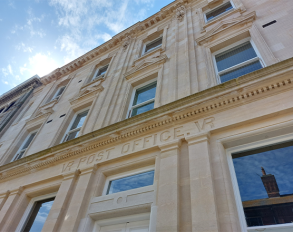
After the Second World War, John Youngs won many of the contracts to reconstruct bomb-wrecked Norwich, including those for housing and industrial buildings. John Youngs rebuilt Mackintosh’s chocolate factory, Bonds Department Store and much of St Stephens. Subsequent contracts included the head Post Office, the Sorting Office, The Baptist Chapel in Duke Street and Lakenham Schools.
In 1967, John Youngs became part of the R G Carter Group and continued to add to its impressive construction record. In the late 1960s the company built Prospect House, home of Eastern Counties Newspapers, a new landmark for the city on the site of the old Golden Ball Public House.
Youngs built a new diagnostic and treatment ward at the Norfolk and Norwich Hospital, and continued work on the site for many years constructing numerous buildings and altering others whilst steadily expanding its client base throughout East Anglia.

Robert Carter
The current Chairman, Robert Carter was, at an early age, thrust into a very senior role as vice-chairman and joint managing director after the sudden death of his father in 1974.
While the business was sound, its rapid expansion, combined with a worsening economic climate had resulted in a need to consolidate. However, the Group had tremendous assets in the experience and expertise of its management and also in the loyalty of long-standing clients.
Robert Carter married Charlotte Miller, the daughter of a notable Norfolk architect, on 2 May 1981, and exactly a year later their first child was born, named Robert Edward, after his grandfather. He was followed by Sophie, James and Camilla.
Robert took over as Group chairman that same year, as well as running R G Carter Ltd at Drayton as general manager between 1980-2. In his view, the Group’s greatest strengths were its building expertise, skilled workforce and expanding reputation. In the increasingly competitive business environment of the recession, Robert Carter was determined to give the Group a commercial edge and make it show a profit in every sphere of activity.
The Group’s traditional approach was unsuited to the more aggressive and volatile construction environment further North. Therefore, considering the depth of the recession, the Wakefield and Hull offices were closed. However, the Group’s traditional strengths meant it was able to come out of the recession in a stronger position.
Having taken the firm back to its roots, further expansion was now possible. The first new office was opened in Peterborough in January 1983, and Peterborough’s development was a typical example of how the Group expanded from the 1980s onwards; the key was steady, progressive, organic growth, rather than growth by acquisition.
Since 1982, under the chairmanship of Robert Carter, the Group has enjoyed the most successful period in its history. A crucial element in this success is the culture of the Group as a family business which embraces everyone from the most junior apprentice to the most senior director and provides a strong element of security and stability for employees.
Also, Robert Carter’s firm belief in the continuous recruitment and training of apprentices – something which has always been maintained no matter how difficult things have been – has enabled the Group to sustain its traditional policy of internal promotion. This not only plays a key role in keeping the skilled and experienced workforce together but also helps the personal and family ethos of the Carter Group to be maintained.

Norwich City F.C.
Since 1979 R G Carter has helped Norwich City Football Club develop its stadium. R G Carter has built all four main stands and, most recently, the Holiday Inn Hotel, completing the full enclosure of the pitch.
In 1979 the firm built the River End spectator stand, now known as the Norwich and Peterborough Stand. On 25 October 1984, the main stand at Carrow Road was destroyed by fire and the company was invited to build a new stand. Two Design & Build schemes were submitted and a contract was signed on 6 November 1985. The new stand, now named the ‘The Geoffrey Watling City Stand’ was opened by the Duchess of Kent on 14 February 1987.
Five years later, in 1992, the firm completed a third stand for the football club, the Barclay Stand, and this was followed by two further corner in-fill stands linking together all the new structures constructed by the company. One of these, officially named the Thorpe Corner is affectionately known as ‘The Snakepit’.
In 2004 the Jarrold stand was completed. This state of the art stand seats 8,000 and offers uninterrupted sight lines, facilities for disabled spectators and executive boxes. The new stand also accommodates Delia Smith’s Canary Catering Company, a restaurant & bar, as well as ‘Yellows’ an American style bar & grill.
In 2008 the pitch was fully enclosed by the construction of the six storey, 180 bed Holiday Inn Hotel the Ben the Barclay and the Jarrold stands.

Downing College Maitland Robinson Library, Cambridge
The library was built by R G Carter Thetford at Downing College, Cambridge, following a £2 million gift from benefactor, Maitland Robinson. Named after him, the foundation stone of the library was laid by his widow on 4 October 1990.
A plaque was also unveiled at the ceremony which paid tribute to her husband “whose generosity made this library possible.”
The ceremony was attended by around 130 people, including R G Carter representatives. It was an emotional occasion, particularly for Mrs Robinson.
The library was designed by architects Erith and Terry to blend in with the traditional college setting and the classical style structure features Greek Revival columns on the exterior and decorative fibrous plaster mouldings inside.
Built on three floors including a basement with a total floor area of 1,075 square metres, local Ketton stone was used for the exterior facade, with Totternhoe lime, as used in the restoration of old churches, specified for the internal brickwork.
Work on the 21-month contract began in earnest in March 1991. It included 220 cubic metres of ready mixed concrete, laid in one day, within the basement floor.
The library was officially opened on 22 November 1993 by HRH Prince Charles and the Duchess of Kent, Katharine.
Described as one of the principal features of the college, it has a convenient and prominent location with “freedom from visual and acoustic distraction”.

The Forum, Norwich
The Forum was the millennium project for the East of England and was to be a fitting landmark for the millennium in the heart of Norwich city.
Works began in May 1999, on the site of the previous Norwich Central Library which was devastated by fire in 1994. The building opened to the public in November 2001 and was officially opened by the Queen on 18 July 2002 as part of the Golden Jubilee celebrations.
The building was designed by Sir Michael Hopkins and constructed by R G Carter Drayton.
Built on adjoining sites The Forum creates a complete block surrounded by the City Hall, the Theatre Royal, Assembly Rooms and the Church of St Peter’s Mancroft.
The main section forms an enclosing horseshoe made from handmade load bearing bricks with several windows. The eastern end of the building has a full, 15 metre high, glazed wall which opens to the Gothic church tower of St Peter’s Mancroft and the city.
The roof comprises six leaf arch trusses with zinc on top of a structural decking, in-filled with glazing bars and toughened glass.
The building is designed to take advantage of the thermal mass of concrete, thereby reducing energy consumption.
The Forum contains a library, multi-media auditorium, local visitor and business centres, a heritage exhibition and shop, bar and restaurant and local BBC station.
Traditional hand-made bricks and special mortars contrast with exposed concrete pillars and soffits which make up the framework of the three-storey building. Below are two levels of basement car-parking with space for up to 240 vehicles.
The building won a number of awards such as the urban design award from 2003 civic trust awards and best structural use of brick from the 2004 BDA brick awards.

R G Carter Today
Our outlook for the coming year remains positive, reflected by our increased investment in staff, offices and equipment.
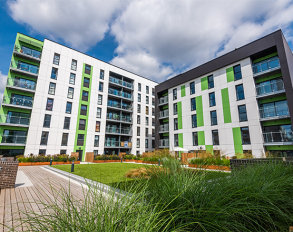
Notable projects recently completed include the renovation of the Memorial Gardens and a striking apartment development in Norwich city centre; High House Farm for the Royal Opera House Production Park; the renovation of the Grade 1 listed St Georges Chapel in Great Yarmouth with architect, Sir Michael Hopkins; and new passenger and hangar facilities at Norwich Airport for Klyne Air.
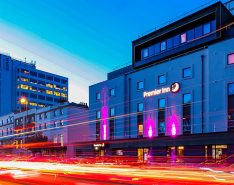
Other projects include three new Waitrose stores on Jersey in the Channel Islands, the redevelopment of Tesco Wembley, and new hotels for Premier Inn, all key clients. We have also completed a seventh phase at Cambridge University Library, with the construction of the new School of Humanities, Social Sciences and the Arts well under way for the same client.
The Firm remains busy and positive about the current year. Projects under construction include the Dementia Intensive Care Unit for Norfolk & Waveney Mental Health Trust; a new Technology Centre for the College of West Anglia; a retail park and Tesco superstore for Reef Estates; a new bridge crossing the river Wensum in Norwich and Premier Inn hotels in High Wycombe, Dartford, Warwick and Richmond.